
While many action RPGs opt for high-fidelity graphics and cinematic spectacle, Path of Exile, known to its devoted community as POE 1, has always carved its own path. The world of Wraeclast is not a beautiful place. It is a grim, decaying penal colony, a land of exile and suffering where every corner holds new horrors and the very atmosphere seems designed to crush the spirit. This unrelenting commitment to a dark, gritty aesthetic is not just a stylistic choice; it is the foundation upon which the entire game is built.
From the moment players wash ashore on the Twilight Strand, the tone is unmistakably established. The color palette is muted and desaturated, dominated by browns, grays, and sickly greens. The architecture is crumbling and oppressive, a remnant of a fallen empire that once ruled these lands with cruelty. The monsters are not cartoonish demons but grotesque, twisted versions of the humans and animals that once inhabited this place. This visual consistency creates a world that feels cohesive and believable in its despair.
This darkness is deeply integrated into the game's lore. Path of Exile tells its story through environmental details, item flavor text, and conversations with NPCs who are as broken as the world around them. Players gradually uncover the tragic history of Wraeclast, learning of ancient atrocities, forbidden experiments, and the corruption that seeps into everything it touches. There is no clear line between good and evil here; only survival. The player character is not a hero destined to save the world, but an exile, a criminal cast out from civilization, fighting only for the chance to live another day.
The game's mechanics reinforce this atmosphere of grim desperation. The currency system, for example, is not based on gold coins but on crafting materials like Orbs of Alteration and Chaos Orbs. These items are scarce and valuable, forcing players to make difficult decisions about when to use them. Dying carries significant penalties, especially in the endgame, where a single mistake can cost hours of progress in experience. This constant tension, the knowledge that Wraeclast is always ready to punish the unwary, keeps the player grounded in the world's harsh reality.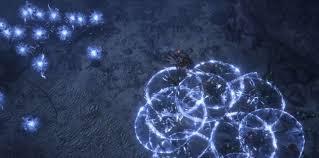
Even the player's power progression feels earned within this context. The immense power granted by the Passive Skill Tree and the skill gem system does not make you feel like a chosen one; it makes you feel like a survivor who has clawed and fought for every advantage. The grotesque forms of some of the character Ascendancy classes, which often involve physical transformations, suggest that the power gained in Wraeclast comes at a cost. You may become strong, but you will not remain untouched by the corruption.
In the end, the gritty world of Path of Exile 3.28 Currency is more than just a backdrop for monster slaying. It is a character in itself, a constant presence that shapes every moment of the gameplay experience. It is a world that refuses to offer comfort or hope, and in doing so, it makes every small victory feel monumental. It is the reason players return to Wraeclast, not in spite of its darkness, but because of it.

 English
