
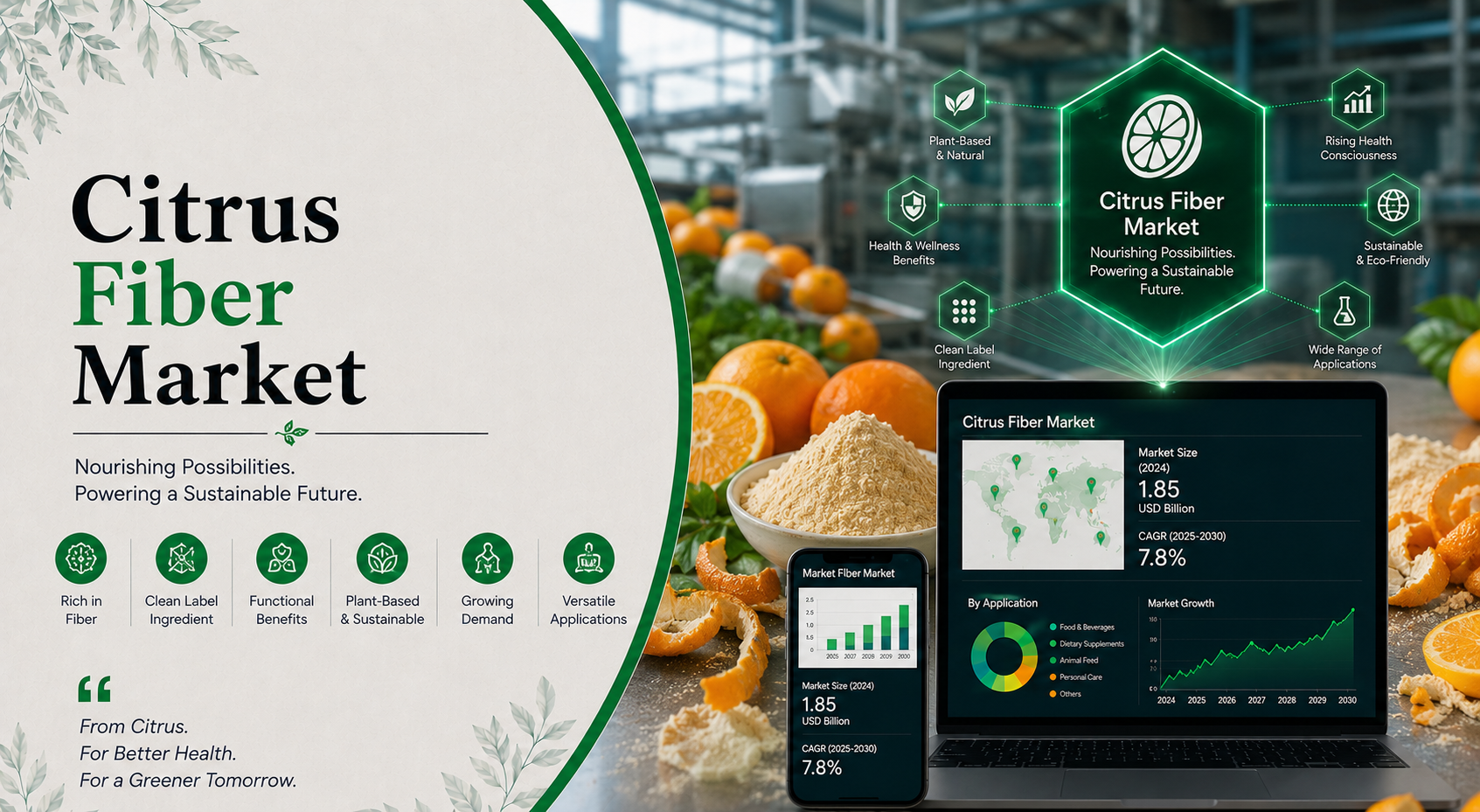
The Citrus Fiber Market is witnessing remarkable growth as food manufacturers, beverage companies, and personal care brands increasingly seek natural, sustainable, and multifunctional ingredients. Derived primarily from citrus peels, citrus fiber has become a preferred ingredient due to its excellent water-binding, emulsification, stabilization, and texture-enhancing properties. As consumers demand clean-label products and healthier alternatives, citrus fiber is gaining widespread adoption across multiple industries.
This blog explores the key drivers, major challenges, and emerging opportunities shaping the global citrus fiber market.
𝐑𝐞𝐪𝐮𝐞𝐬𝐭 𝐏𝐝𝐟 𝐒𝐚𝐦𝐩𝐥𝐞 𝐇𝐞𝐫𝐞:https://m2squareconsultancy.com/request-sample/citrus-fiber-market/790
Rising Consumer Demand for Clean-Label Ingredients
One of the primary factors fueling the citrus fiber market is the growing preference for clean-label food products. Consumers today are paying closer attention to ingredient lists and favor products made with recognizable, plant-based components instead of synthetic additives.
Citrus fiber serves as a natural replacement for artificial stabilizers, emulsifiers, and texturizers in processed foods. Its ability to improve product consistency while maintaining a clean ingredient label makes it an attractive solution for manufacturers responding to changing consumer preferences.
Expanding Applications Across Food and Beverage Industries
The versatility of citrus fiber has significantly expanded its commercial applications. It is widely used in:
- Bakery and confectionery products
- Dairy and plant-based dairy alternatives
- Processed meat and seafood products
- Sauces, dressings, and condiments
- Ready-to-eat meals
- Functional beverages
- Frozen foods
Its excellent moisture retention and fat replacement capabilities help manufacturers improve product texture while reducing overall fat content. This aligns perfectly with the increasing demand for healthier food products without compromising taste or quality.
Sustainability Driving Market Growth
Sustainability has become a critical focus across the global food industry. Citrus fiber is produced using citrus peels, a by-product generated during juice manufacturing. Instead of being discarded as waste, these peels are transformed into valuable functional ingredients.
This circular economy approach supports waste reduction, resource optimization, and environmentally responsible manufacturing practices. Companies adopting sustainable sourcing strategies are increasingly incorporating citrus fiber into their product portfolios to strengthen their environmental commitments.
Increasing Popularity in Plant-Based Foods
The rapid expansion of vegan and plant-based food categories has created significant demand for multifunctional plant-derived ingredients. Citrus fiber enhances texture, improves moisture retention, and provides stability in plant-based meat alternatives, dairy substitutes, and vegan bakery products.
As global consumers continue shifting toward flexitarian and plant-based diets, citrus fiber is expected to become an essential ingredient in innovative food formulations.
Technological Innovations Supporting Product Development
Continuous advancements in food processing technologies are improving the functionality and performance of citrus fiber. Manufacturers are developing specialized citrus fiber grades tailored for specific applications, including beverages, meat processing, dairy alternatives, and gluten-free foods.
Innovative extraction techniques are also enhancing product quality while maintaining natural characteristics, allowing manufacturers to meet evolving consumer expectations for premium clean-label ingredients.
Challenges Facing the Citrus Fiber Market
Despite strong growth prospects, the citrus fiber market faces several challenges.
One major concern is the seasonal availability of citrus fruits, which can influence raw material supply and pricing. Weather conditions, crop diseases, and fluctuations in agricultural production may impact the consistency of citrus peel availability.
Additionally, processing citrus fiber requires advanced manufacturing technologies and strict quality control standards. Smaller manufacturers may face barriers related to production costs and investment requirements.
Competition from alternative natural fibers such as oat fiber, apple fiber, bamboo fiber, a