
If you've reached menopause and suddenly find that your old workout routine no longer delivers the same results, you're not alone. Many women notice weight gain, reduced energy, muscle loss, poor sleep, and frequent hot flashes despite maintaining the same lifestyle they've always followed.
The reason isn't a lack of effort—it's changing hormones.
As estrogen levels decline, your body begins responding differently to exercise, recovery, and metabolism. The good news is that exercise during menopause remains one of the most powerful tools for managing symptoms and protecting long-term health.
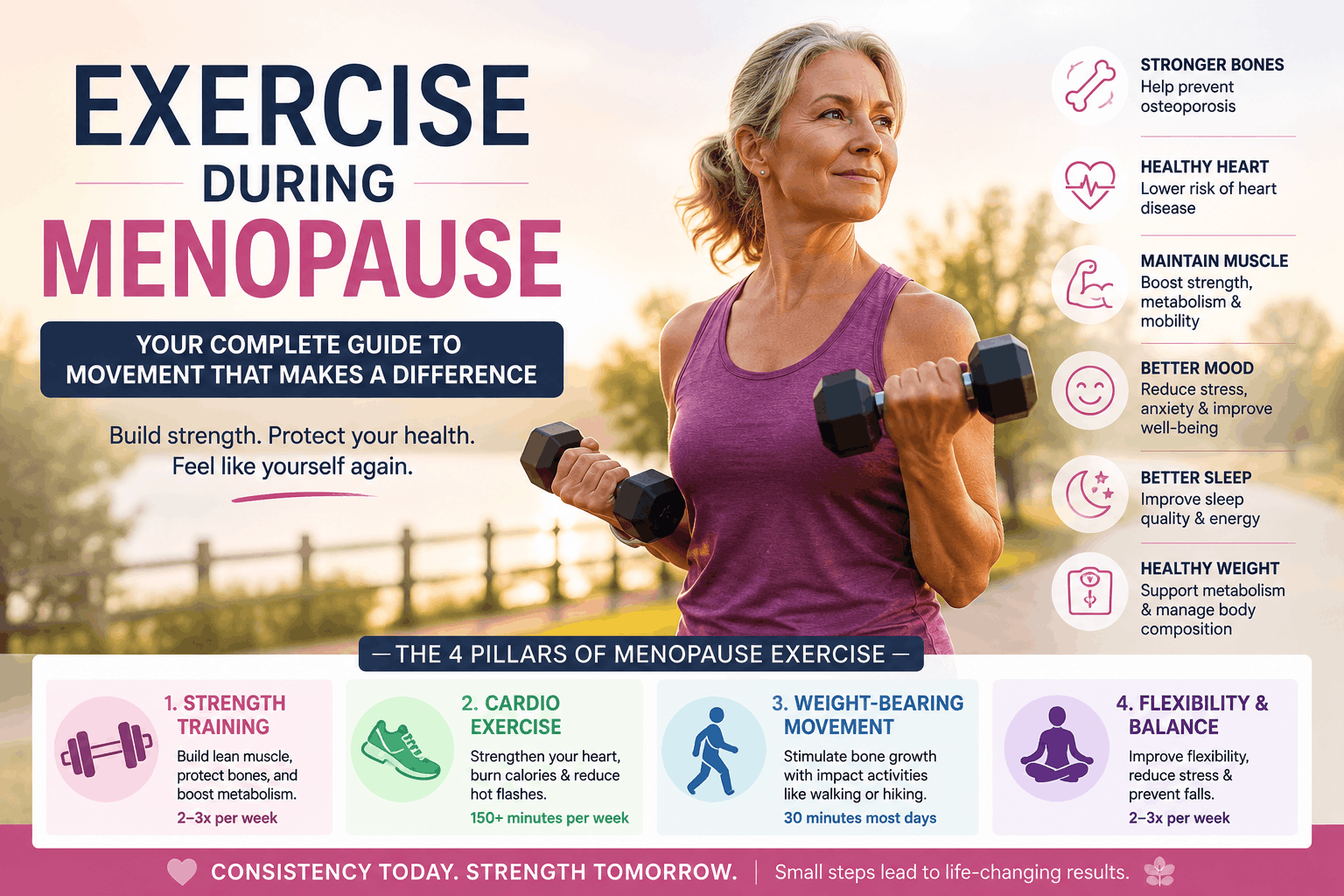
The right combination of strength training, cardiovascular exercise, flexibility work, and weight-bearing movement can improve bone density, preserve muscle, support heart health, reduce menopause symptoms, and help you feel stronger every day.
Why Exercise Becomes Even More Important During Menopause
Menopause affects nearly every major system in the body.
As estrogen declines, women commonly experience:
- Reduced bone density
- Slower metabolism
- Loss of lean muscle
- Increased abdominal fat
- Joint stiffness
- Poor sleep
- Mood changes
- Higher cardiovascular risk
While these changes are natural, staying active helps slow many of them and supports healthy aging.
Studies have consistently shown that women who exercise regularly during menopause often report:
- Fewer hot flashes
- Better sleep quality
- Improved mood
- More energy
- Better balance
- Stronger bones
- Healthier body composition
- Lower risk of osteoporosis and heart disease
Rather than focusing only on weight loss, think of exercise as medicine for your entire body.
How Menopause Changes Your Body
Bone Health Declines
One of the biggest changes during menopause is accelerated bone loss.
Lower estrogen causes bones to lose minerals more quickly, increasing the risk of osteoporosis and fractures.
Weight-bearing exercise and strength training help stimulate bone formation and maintain bone density.
Muscle Mass Decreases
Muscle naturally declines with age, but menopause speeds up this process.
Less muscle means:
- Slower metabolism
- Reduced strength
- Lower calorie burn
- Higher fall risk
Regular resistance training helps preserve lean muscle while improving mobility and everyday function.
Metabolism Slows Down
Many women notice weight gain around the abdomen during menopause.
This happens because hormonal changes reduce metabolic rate while increasing fat storage.
Exercise helps maintain muscle mass, improves insulin sensitivity, and supports healthy weight management.
Heart Health Needs More Attention
Before menopause, estrogen offers some protection against heart disease.
After menopause, cardiovascular risk gradually increases.
Regular aerobic exercise strengthens the heart, improves circulation, lowers blood pressure, and supports healthy cholesterol levels.
The Four Essential Types of Exercise During Menopause
A complete menopause fitness plan should include four different forms of movement.
1. Strength Training
If you could choose only one type of exercise, choose strength training.
Building muscle becomes increasingly important after menopause because it helps maintain metabolism, bone strength, and mobility.
Benefits include:
- Builds lean muscle
- Supports metabolism
- Strengthens bones
- Improves posture
- Enhances balance
- Helps reduce body fat
Examples include:
- Dumbbells
- Resistance bands
- Bodyweight exercises
- Kettlebells
- Weight machines
Aim for two to three sessions each week.
Contrary to popular belief, lifting weights will not make most women bulky. Instead, it creates a leaner, stronger body.
2. Cardiovascular Exercise
Cardio keeps your heart healthy while improving endurance and energy.
Regular aerobic exercise can also reduce menopause symptoms for many women.
Good options include:
- Walking
- Hiking
- Swimming
- Cycling
- Dancing
- Running
- Low-impact aerobics
Experts recommend at least 150 minutes of moderate aerobic activity each week.
Helpful tips:
- Exercise in cooler temperatures.
- Stay hydrated.
- Wear lightweight clothing.
- Gradually increase intensity.
3. Weight-Bearing Exercise
Bones respond positively when they carry your body weight.
Unlike swimming or cycling, weight-bearing exercise stimulates new bone growth.
Examples include:
- Brisk walking
- Stair climbing
- Hiking
- Dancing
- Tennis
- Pickleball
- Light jogging
Women with osteoporosis or severe joint pain should discuss higher-impact activities with their healthcare provider before beginning.
4. Flexibility and Balance Training
Declining estrogen also affects connective tissues and balance.
Improving flexibility reduces stiffness while balance exercises lower the risk of falls.
Excellent options include:
- Yoga
- Pilates
- Tai Chi
- Stretching routines
- Balance exercises
Many women also notice improved sleep and reduced stress after adding yoga to their weekly routine.
A Simple Weekly Menopause Exercise Plan
A balanced routine might look like this:
Monday
Strength training
Tuesday
30-minute brisk walk
Wednesday
Yoga or stretching
Thursday
Strength training
Friday
Cycling or swimming
Saturday
Outdoor walk or recreational activity
Sunday
Gentle stretching and balance work
Consistency always matters more than perfection.
Can Exercise Help Reduce Hot Flashes?
Many women worry that exercise might trigger hot flashes.
Initially, this can happen.
However, research suggests regular exercise often decreases both the frequency and severity of hot flashes over time.
To stay comfortable:
- Exercise in cool environments.
- Stay hydrated.
- Wear moisture-wicking clothing.
- Try water-based workouts during warmer months.
Better Sleep Through Exercise
Sleep problems are one of menopause's biggest frustrations.
Regular physical activity helps:
- Fall asleep faster
- Improve sleep quality
- Increase deep sleep
- Reduce nighttime stress
Morning or afternoon exercise generally works better than vigorous workouts close to bedtime.
Exercise Improves Mood
Hormonal changes can increase anxiety, irritability, and depression.
Exercise naturally increases endorphins while supporting healthy serotonin production.
Benefits include:
- Better mood
- Reduced stress
- Increased confidence
- Better concentration
- More emotional resilience
Even a daily walk can make a noticeable difference.
Managing Weight During Menopause
Weight gain becomes more common because metabolism slows while muscle declines.
The best long-term strategy combines:
- Exercise during menopause
- Strength training
- Cardiovascular activity
- Protein-rich nutrition
- Good sleep habits
Rather than chasing rapid weight loss, focus on improving body composition and maintaining muscle.
Exercise for Joint Health
Many women develop joint stiffness during menopause.
Movement actually helps by:
- Improving flexibility
- Strengthening supporting muscles
- Increasing circulation
- Reducing stiffness
Walking, swimming, cycling, and gentle resistance training are excellent low-impact choices.
Common Exercise Challenges
"I'm Too Tired"
Fatigue is common during menopause.
Ironically, regular exercise often improves energy over time.
Start with just 10–15 minutes and build gradually.
"I Don't Have Time"
You don't need hour-long workouts.
Three 10-minute walks throughout the day provide meaningful health benefits.
"Exercise Makes Me Feel Worse"
Instead of quitting:
- Reduce intensity.
- Exercise earlier.
- Try cooler environments.
- Choose low-impact activities.
Your body usually adapts within a few weeks.
"I've Never Exercised Before"
It's never too late to start.
Women in their 60s, 70s, and beyond continue to build strength, improve balance, and increase mobility through regular exercise.
Staying Motivated
Exercise should fit your lifestyle.
Helpful strategies include:
- Find activities you enjoy.
- Exercise with friends.
- Join walking groups.
- Track your progress.
- Celebrate consistency.
- Mix different activities throughout the week.
The best workout is always the one you'll continue doing.
When Should You Talk to Your Doctor?
Consult a healthcare provider before starting a new exercise program if you have:
- Heart disease
- Osteoporosis
- Recent fractures
- Pelvic floor disorders
- Chronic joint pain
- High blood pressure
- Other long-term medical conditions
A physical therapist or certified trainer can also help create a personalized plan.
Final Thoughts
Menopause changes your body, but it doesn't have to limit your health, strength, or confidence.
A consistent exercise routine that combines strength training, cardio, flexibility work, and weight-bearing movement can improve bone health, maintain muscle, reduce menopause symptoms, support heart health, and increase energy.
You don't need perfect workouts—you simply need consistent movement.
Small daily habits create long-term results, helping you stay active, independent, and healthy for years to come.

 English
