
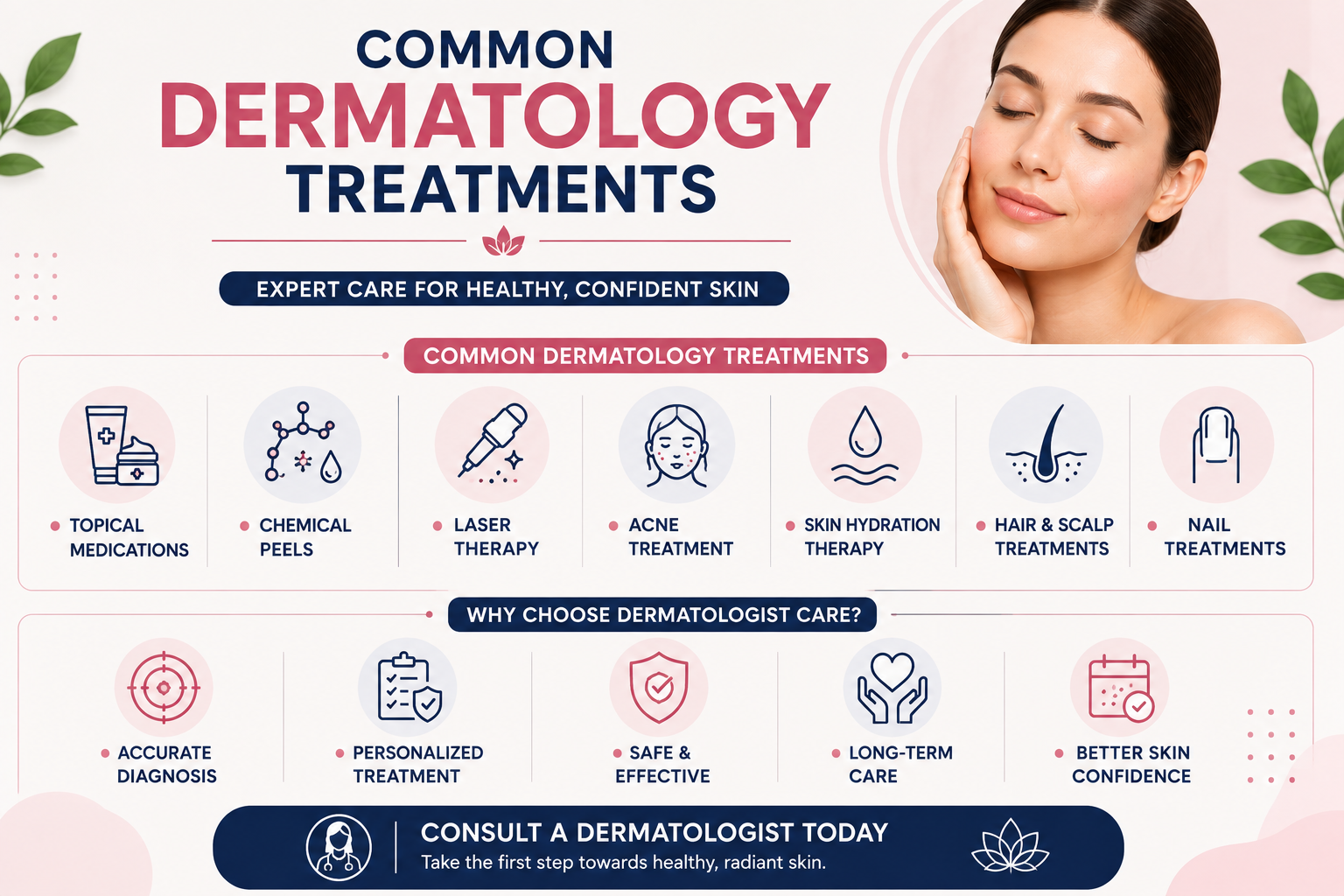
Dermatology covers much more than treating acne or improving the appearance of the skin. Dermatologists diagnose and manage medical conditions affecting the skin, hair, scalp, and nails. Depending on the condition, treatment may range from simple skincare changes and topical medicines to oral medication, light-based therapy, or specific dermatological procedures.
One important point is that there is no single treatment suitable for every skin problem. A red, itchy patch could be eczema, contact dermatitis, psoriasis, or an infection, and each may require a different approach. Understanding common dermatology treatments can help patients know why diagnosis usually comes before treatment.
For persistent or recurring skin concerns, professional medical dermatology treatment can help determine the cause of symptoms and identify suitable treatment options based on the condition and its severity.
Topical Medications
Topical treatments are medicines applied directly to the affected skin and are widely used in dermatology.
They are available as creams, ointments, lotions, gels, foams, solutions, and shampoos. The formulation selected often depends on the condition and where it occurs.
Topical medicines may be used for acne, eczema, psoriasis, fungal infections, certain bacterial conditions, pigmentation problems, and scalp disorders.
Because topical treatments contain different active ingredients and strengths, they should be used according to their intended purpose.
Treatments for Acne
Acne treatment varies according to the type and severity of breakouts.
Topical medicines may be used to reduce blocked pores, inflammation, and acne-causing processes within the skin. Common treatment approaches can include retinoids, benzoyl peroxide, or other prescribed medicines.
For moderate or severe acne, dermatologists may sometimes recommend oral medications.
Treatment is usually gradual. Consistent use is important because noticeable improvement can take several weeks.
When active acne has been controlled, separate treatments may sometimes be considered for persistent marks or scarring.
Treatments for Eczema and Dermatitis
Eczema treatment generally focuses on reducing inflammation and supporting the skin barrier.
Regular moisturising is often an important part of care because eczema-prone skin can lose moisture easily.
During flare-ups, dermatologists may prescribe topical corticosteroids or other anti-inflammatory medicines. Treatment strength and duration depend on factors such as age, severity, and the area affected.
For moderate or severe eczema that does not respond adequately to topical care, other therapies may be considered under medical supervision.
Antifungal Treatments
Fungal infections can affect the skin, scalp, feet, groin, skin folds, and nails.
Localised fungal infections are often treated with topical antifungal medicines. More extensive infections or those involving certain areas may sometimes require oral antifungal medication.
However, confirming the diagnosis is important.
Eczema and other inflammatory skin conditions can occasionally resemble fungal infections. Repeatedly using antifungal products on an undiagnosed rash may therefore delay appropriate treatment.
Antibiotic Treatment for Skin Conditions
Antibiotics are used for specific bacterial skin infections and, in selected situations, certain inflammatory skin conditions.
Depending on the diagnosis, topical or oral antibiotics may be prescribed.
Antibiotics are not useful for fungal or viral infections and should not be used unnecessarily.
Incorrect or excessive antibiotic use contributes to antimicrobial resistance. Dermatologists therefore consider whether a bacterial cause is likely before prescribing these medicines.
Antiviral Treatment
Certain viral conditions affecting the skin may benefit from antiviral medicines.
Herpes infections are one example where antiviral medication may be considered depending on the individual situation.
Other viral conditions, such as some warts, may be treated differently and can require topical treatment or procedures.
Not every viral skin condition requires medication. The decision depends on the diagnosis, severity, location, and symptoms.
Psoriasis Treatments
Psoriasis treatment can range from topical medicines to therapies that work throughout the body.
Mild or localized psoriasis may be managed with topical corticosteroids, vitamin D-related medicines, or other treatments.
For more extensive disease, phototherapy may sometimes be considered.
Moderate or severe psoriasis can require oral medicines or injectable therapies, including biologic medicines that target particular immune pathways.
Treatment is personalized according to disease severity, affected areas, medical history, and previous treatment response.
Phototherapy
Phototherapy uses controlled exposure to specific wavelengths of ultraviolet light.
It may be used for conditions such as psoriasis, eczema, vitiligo, and certain other dermatological disorders when clinically appropriate.
Medical phototherapy differs from ordinary sun exposure because the dose and treatment schedule are carefully controlled.
Patients typically require multiple sessions, and treatment is performed under professional supervision to reduce unnecessary ultraviolet exposure.
Treatments for Skin Allergies
Skin allergies can cause itching, redness, swelling, or recurring rashes.
Treatment often starts with identifying and avoiding the responsible allergen when possible.
Topical anti-inflammatory medicines may be used to control symptoms.
When allergic contact dermatitis is suspected and the trigger is unclear, patch testing may sometimes be recommended to identify substances causing delayed allergic reactions.
Avoiding the identified allergen can then become an important part of long-term management.
Pigmentation Treatments
Pigmentation concerns can include dark spots, melasma, post-inflammatory pigmentation, or areas of reduced skin colour.
Because pigmentation changes have different causes, treatment should begin with diagnosis.
Sun protection is often an important part of managing pigmentation. Depending on the condition, dermatologists may also recommend topical medicines or selected procedures.
Some pigmentation concerns require patience because improvement can occur gradually.
Using aggressive products without appropriate guidance may cause irritation and potentially worsen pigmentation.
Hair Loss Treatments
Hair loss treatment depends strongly on its cause.
Genetic hair loss, temporary shedding, autoimmune hair loss, and hair loss associated with scalp disorders can require different approaches.
A dermatologist may first examine the scalp and pattern of hair loss and review medical history. Blood tests or other investigations may sometimes be appropriate.
Depending on the diagnosis, treatment can include topical medication, oral medicines, management of an underlying scalp condition, or correction of contributing factors.
Hair grows slowly, so treatment response often requires several months to evaluate.
Treatments for Scalp Conditions
Persistent dandruff, itching, redness, and scaling can be caused by conditions such as seborrhoeic dermatitis or scalp psoriasis.
Treatment may involve medicated shampoos, topical solutions, foams, or other medicines depending on the diagnosis.
The scalp can sometimes be difficult to treat because hair affects how products are applied. Dermatologists may therefore select formulations specifically designed for scalp use.
Recurring or severe scalp symptoms should be properly diagnosed before long-term treatment is started.
Nail Treatments
Nail conditions can be caused by fungal infections, injury, psoriasis, and other dermatological problems.
When fungal infection is suspected, a dermatologist may recommend testing before prescribing long courses of antifungal treatment.
Treatment may include topical or oral medication depending on the condition.
Nails grow slowly, so visible improvement can take months even when treatment is working.
Dermatological Procedures
Medication is not the only form of dermatology treatment.
Depending on the condition, dermatologists may perform procedures such as cryotherapy, which uses controlled freezing and can be used for selected skin lesions including certain warts.
Other procedures may include removal or sampling of skin lesions, drainage of particular infections, or a skin biopsy for diagnostic purposes.
The procedure selected depends on the diagnosis and clinical need.
Skin Biopsy
A skin biopsy is primarily a diagnostic procedure rather than a treatment.
During a biopsy, a small sample of skin is removed and examined under a microscope.
It may be recommended when the appearance of a skin condition is unusual or when additional information is needed to establish the diagnosis.
Biopsies can help dermatologists distinguish between inflammatory conditions, certain infections, skin growths, and other disorders.
Not every skin problem requires a biopsy.
Why Treatment Should Be Personalised
Two people with the same diagnosis may not always receive exactly the same treatment.
Age, severity, affected area, medical history, allergies, pregnancy status, previous treatment response, and other factors can influence treatment decisions.
For example, a medicine suitable for thick psoriasis plaques on the body may not be appropriate for delicate facial skin.
Personalised treatment helps balance effectiveness with safety and practicality.
Why Follow-Up Matters
Some dermatology treatments require time before results become noticeable.
Acne may take several weeks to improve. Chronic eczema and psoriasis can require treatment adjustments. Hair and nail conditions can take months to show visible changes.
Follow-up appointments allow dermatologists to evaluate progress, identify side effects, and determine whether treatment should continue or change.
Patients using certain oral or injectable medicines may also require medical or laboratory monitoring.
When Should You Seek Dermatological Treatment?
Consider consulting a dermatologist when a skin problem repeatedly returns, persists for several weeks, spreads, becomes painful, or causes significant itching.
Professional evaluation may also be helpful for persistent acne, unexplained hair loss, recurring infections, pigmentation changes, ongoing scalp concerns, or unusual nail changes.
New or changing moles and other concerning skin growths should also be professionally assessed.
Rapidly worsening, widespread, painful, or otherwise severe symptoms may require prompt medical attention.
Conclusion
Understanding common dermatology treatments makes it clear why an accurate diagnosis is important before treatment begins.
Topical medicines may be appropriate for many conditions, while others require oral medication, antifungal or antibiotic treatment, phototherapy, injectable medicines, or dermatological procedures. Hair, scalp, nail, and pigmentation concerns also require treatment based on their underlying cause.
Rather than selecting a treatment based only on visible symptoms, dermatologists consider the diagnosis, severity, affected area, medical history, and individual needs.
The right treatment is therefore not necessarily the strongest or newest option. It is the one that is medically appropriate for the specific condition and patient.

 English
