
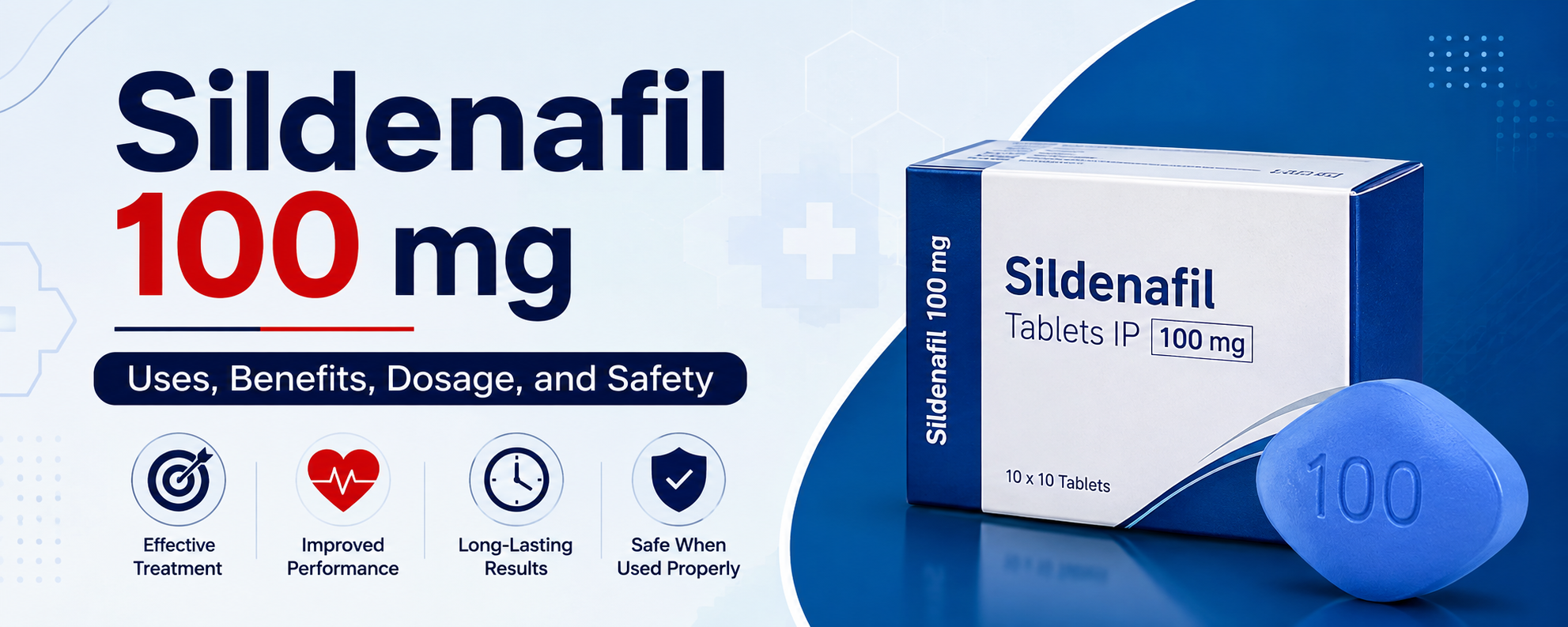
Sildenafil 100 mg is a prescription medication primarily used to treat erectile dysfunction (ED) in adult men. It belongs to a group of medicines called phosphodiesterase type 5 (PDE5) inhibitors. Sildenafil works by increasing blood flow to the penis when a man is sexually stimulated, helping him achieve and maintain an erection. It does not increase sexual desire and does not cause an erection without sexual stimulation.
Sildenafil is available in several strengths, including 25 mg, 50 mg, and 100 mg. 100 mg is generally considered the highest commonly recommended dose, but it is not necessarily the appropriate starting dose for everyone. A healthcare professional can determine the most suitable strength based on factors such as age, medical history, other medicines, kidney or liver function, and how the person responds to treatment.
For erectile dysfunction, sildenafil is usually taken approximately 30 to 60 minutes before sexual activity. Its effects may last for several hours, although this does not mean that an erection will remain present throughout that period. Sexual stimulation is still necessary. Sildenafil can be taken with or without food, but a heavy or high-fat meal may delay its effects.
Taking more sildenafil than prescribed does not necessarily improve its effectiveness and can increase the risk of side effects. Common side effects may include headache, facial flushing, indigestion, nasal congestion, dizziness, and changes in vision. These effects are often temporary, but medical advice should be sought if they are severe or persistent.
Sildenafil is particularly important to use cautiously because it can interact with certain medicines. It must not be taken with nitrate medicines, which are commonly prescribed for chest pain or angina, because the combination can cause a dangerous drop in blood pressure. People taking alpha-blockers or certain other medicines should also consult a healthcare professional before using sildenafil.
Anyone with significant heart disease, very low blood pressure, recent stroke or heart attack, or certain eye or blood disorders should discuss sildenafil with a doctor before treatment. Alcohol can also increase dizziness and may make it more difficult to achieve an erection.
A rare but serious side effect is priapism, an erection lasting more than four hours. This requires immediate medical attention because it can cause permanent damage. Sudden loss of vision or hearing should also be treated as a medical emergency.
Sildenafil should be obtained from a reliable, legitimate pharmacy and used according to professional medical advice. Counterfeit or improperly manufactured products sold through unverified websites may contain incorrect amounts of active ingredients or potentially harmful substances.
Overall, sildenafil 100 mg can be an effective treatment for erectile dysfunction when it is appropriate for the individual. However, the 100 mg strength is not automatically suitable for everyone. A healthcare professional can help determine the correct dose and identify potentially dangerous interactions or health conditions before treatment.

 Russian
