
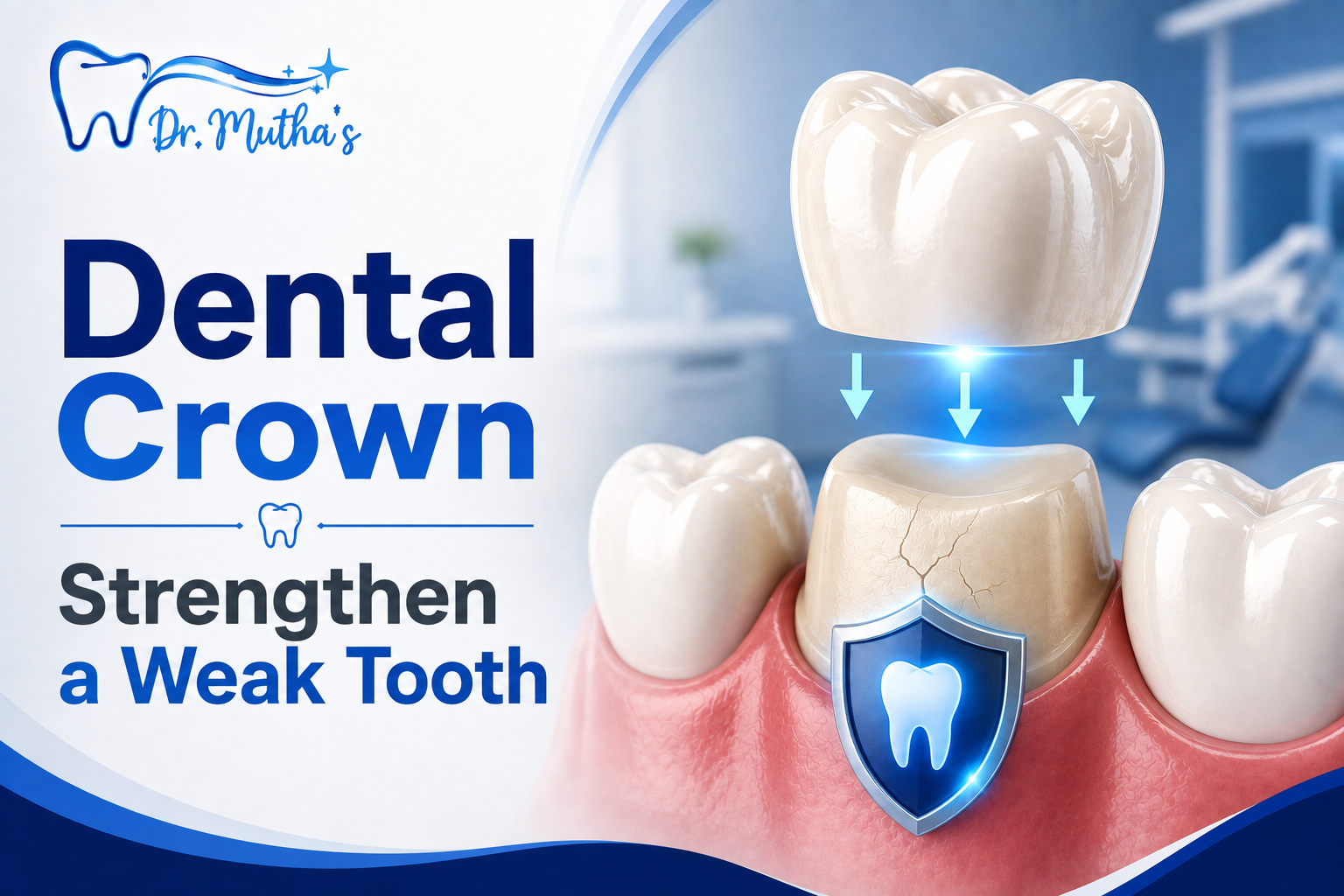
A tooth does not always become weak suddenly. Decay, repeated fillings, cracks, tooth wear, or previous dental treatment can gradually reduce the amount of healthy tooth structure. The tooth may still be restorable, but it may need additional protection to continue handling everyday biting and chewing.
For someone visiting a dental clinic in Chinchwad , a dentist may recommend a dental crown when the remaining tooth is too weak for a smaller restoration to provide suitable coverage. A crown fits over the prepared visible portion of the tooth and helps protect the remaining structure.
A crown does not make the natural tooth stronger in a biological sense. Instead, it provides an outer covering that supports and protects the weakened tooth while restoring its shape and function.
What Makes a Tooth Weak?
The outer structure of a healthy tooth is designed to tolerate normal chewing forces. When part of this structure is lost or damaged, the remaining areas may become more vulnerable.
A tooth can become weak because of:
- A large cavity
- Repeated dental fillings
- A very large existing filling
- Cracks or fractures
- Root canal treatment
- Teeth grinding or clenching
- Severe tooth wear
- Trauma or injury
The amount of damage matters. A small cavity may leave most of the natural tooth unaffected, while extensive decay or a large fracture can leave only thin sections of tooth structure behind.
This is one reason dentists examine how much healthy tooth remains before recommending a crown.
How Does a Dental Crown Support a Weak Tooth?
A dental crown is designed to cover the prepared visible portion of a tooth.
When a tooth has become structurally weak, this broader coverage can provide support that a smaller restoration may not provide.
The crown essentially creates a new outer surface around the prepared tooth.
This may help protect vulnerable areas, restore missing tooth structure, and allow chewing forces to be distributed across the restored surface.
However, the tooth must have enough suitable structure and support underneath the crown for the treatment to be appropriate.
A Crown Covers Weakened Tooth Walls
One of the main reasons a crown may be recommended is to protect thin or weakened areas of a tooth.
Consider a tooth with a large cavity. After the dentist removes the decay, only a few natural walls may remain.
Although a filling can replace the missing area, those remaining walls may still be relatively thin.
A crown provides more extensive coverage by fitting over the prepared tooth.
This can be useful when the dentist determines that the remaining structure needs greater protection during biting and chewing.
A Crown Restores the Shape of a Damaged Tooth
Weak teeth are often also damaged teeth.
A fracture, large cavity, or severe wear may change the original shape of the tooth. This can affect how it contacts neighbouring and opposing teeth.
A dental crown is individually made to restore an appropriate shape and chewing surface.
Before the crown is permanently attached, the dentist evaluates its:
- Fit
- Shape
- Bite
- Contact with nearby teeth
- Appearance
Restoring the tooth's shape can help it function more appropriately within the bite.
A Crown Helps Manage Chewing Forces
Teeth experience pressure every time you bite or chew.
A healthy tooth can usually tolerate normal chewing forces because its natural structure provides support.
When significant tooth structure has been lost, however, pressure may be concentrated on thinner or weakened areas.
A properly designed crown covers the prepared tooth and can help distribute forces across the restored surface.
This does not mean the crowned tooth becomes unbreakable. Excessive pressure from grinding, clenching, trauma, or biting very hard objects can still affect the crown or underlying tooth.
Can a Crown Help a Tooth With a Large Filling?
A tooth with a very large filling may have less natural structure remaining than it appears to have.
The filling itself may occupy much of the tooth, leaving thinner natural walls around it.
Over time, those walls can sometimes develop cracks or break.
If an existing filling becomes damaged or additional tooth structure is lost, simply placing another large filling may not always provide the coverage the tooth needs.
When the remaining tooth is suitable for restoration, a crown may be considered to provide broader protection.
However, a large filling does not automatically mean a crown is necessary. The dentist needs to examine the condition and strength of the remaining natural tooth.
Can a Crown Support a Tooth Weakened by Decay?
Tooth decay gradually destroys natural tooth structure.
Small cavities can often be repaired with fillings. When decay becomes extensive, removing the affected areas may leave less healthy tooth behind.
The remaining walls may become thin or weakened.
If enough suitable tooth structure remains, a crown may be recommended to cover the prepared tooth.
Importantly, active decay needs to be treated before the crown is placed. The crown protects the restored tooth; it does not remove or treat the underlying decay itself.
Can a Crown Protect a Cracked and Weak Tooth?
Certain cracked teeth may be candidates for crown treatment.
A crack may develop because of trauma, large fillings, grinding, clenching, biting hard objects, or repeated chewing forces.
Some signs associated with a cracked tooth include:
- Pain while chewing
- Sharp discomfort when biting
- Sensitivity to hot or cold
- Pain when releasing biting pressure
- Symptoms that come and go
When a crack affects a restorable part of the tooth, a crown may provide broader coverage around the weakened structure.
However, cracks vary considerably.
A crack extending deeply into the root may make crown treatment unsuitable. A Dentist in Chinchwad can examine the tooth to determine the location and extent of the crack before recommending treatment.
Why Might a Root Canal-Treated Tooth Need a Crown?
Root canal treatment addresses infection or inflammation involving the tissue inside the tooth.
The treatment itself does not automatically mean that every tooth needs a crown. However, teeth requiring root canal treatment may already have lost considerable natural structure because of deep decay, previous fillings, or fractures.
This may leave the tooth structurally weakened.
Depending on the tooth's location and the amount of structure remaining, a crown may be recommended to provide additional coverage. This can be particularly relevant for certain back teeth exposed to greater chewing forces.
The dentist considers the remaining tooth structure, existing restorations, cracks, tooth position, and bite before deciding on the final restoration.
Want to understand when a weakened or damaged tooth may require this additional protection? Learn when a damaged tooth may need a dental crown and explore the common situations where crown treatment may be considered.
A dental examination is still necessary because the appropriate treatment depends on the condition of the individual tooth.
Can a Crown Strengthen a Broken Tooth?
A crown may be used for certain broken teeth, but the size and depth of the fracture are important.
A minor chip may sometimes be repaired with bonding or a filling without requiring extensive tooth preparation.
When a substantial portion of the tooth breaks away, the remaining structure may need greater coverage.
If enough healthy tooth remains to support a restoration, a crown may be used to rebuild the missing shape and cover the weakened tooth.
However, a fracture extending deeply below the gum line or into the root may require a different treatment approach.
What About Teeth Weakened by Grinding or Wear?
Grinding and clenching can gradually wear down natural teeth.
As the tooth loses structure, its height, shape, and chewing surface may change.
When the wear becomes severe, a crown may sometimes form part of a treatment plan to rebuild the damaged tooth.
However, restoring the tooth without considering the cause of the wear may leave the new restoration exposed to the same excessive forces.
The dentist may therefore assess the patient's bite and signs of grinding or clenching when planning treatment.
Is a Crown Always Better Than a Filling for a Weak Tooth?
No.
A crown and a filling have different purposes.
A filling repairs a specific damaged area and may be appropriate when enough strong natural tooth structure remains.
A crown provides more extensive coverage and may be considered when a significant portion of the tooth has been weakened.
Choosing a crown simply because it provides more coverage is not necessarily appropriate.
The goal should be to select a restoration suitable for the amount of damage while preserving healthy natural tooth structure whenever possible.
How Does a Dentist Decide Whether a Weak Tooth Needs a Crown?
A dentist evaluates more than the visible appearance of the tooth.
Factors that may be considered include:
- Amount of healthy tooth remaining
- Size and depth of decay
- Strength of remaining tooth walls
- Presence of cracks
- Location of fractures
- Condition of existing fillings
- Previous root canal treatment
- Tooth nerve health
- Root condition
- Gum and bone support
- Bite and chewing forces
Dental X-rays may also be recommended when more information about the roots, surrounding bone, decay, or previous treatment is required.
Based on these findings, the dentist can determine whether the tooth needs a crown or can be treated with a more conservative restoration.
Can Every Weak Tooth Be Strengthened With a Crown?
No. A crown needs an appropriate foundation underneath it.
If too much natural tooth structure has been lost, there may not be enough suitable support for crown treatment.
A crown may not be appropriate when there is:
- A deep fracture extending into the root
- Extensive damage below the gum line
- Insufficient restorable tooth structure
- Significant root problems
- Inadequate support around the tooth
In these situations, the dentist can discuss whether another treatment option should be considered.
What Happens During Dental Crown Treatment?
When examination shows that a crown is appropriate, any existing decay or other dental problems are addressed first.
The tooth is then carefully prepared to create space for the crown.
An impression or digital scan records the prepared tooth and surrounding teeth. This information is used to make the restoration.
A temporary crown may sometimes be placed while the final crown is being prepared.
When the permanent crown is ready, the dentist checks its fit, bite, shape, contacts, and appearance before securely attaching it.
The aim is to create a restoration that fits appropriately while protecting the remaining natural tooth.
How Can You Keep a Crowned Tooth Protected?
A crown covers the prepared tooth, but natural tooth structure remains underneath and around the restoration.
Good oral hygiene, therefore, remains important.
Brush twice daily and clean between your teeth regularly. Pay particular attention to the area where the crown meets the natural tooth because plaque can collect around this margin.
Avoid using your teeth to crack hard objects or open packaging.
If you grind or clench your teeth, discuss this with your dentist because repeated excessive forces can affect both the crown and natural tooth.
A crown that becomes loose, chipped, painful, or uncomfortable should also be examined.
Frequently Asked Questions
1. Does a dental crown really strengthen a weak tooth?
A crown does not make natural tooth structure biologically stronger. Instead, it covers and protects the weakened remaining tooth and helps restore its shape and function.
2. Can a weak tooth be treated with a filling instead?
Yes, in some cases. When the damaged area is limited and enough strong natural structure remains, a filling may be appropriate.
3. Can a crown help protect a cracked tooth?
Certain restorable cracked teeth may benefit from the broader coverage provided by a crown. The depth and location of the crack need to be evaluated first.
4. Does every root canal-treated tooth need a crown?
No. The decision depends on factors such as the tooth's location, remaining natural structure, existing restorations, cracks, and chewing forces.
5. Can a tooth still break after getting a crown?
Yes. A crown provides additional protection but does not make a tooth indestructible. Trauma, grinding, excessive biting forces, decay, or other problems can still affect a crowned tooth.
Support a Weak Tooth With the Right Restoration
A dental crown can help protect a tooth that has become weak because of extensive decay, large fillings, cracks, fractures, severe wear, or previous treatment. By covering the prepared tooth, a crown can restore its shape and provide broader protection to the remaining natural structure.
However, not every weak tooth requires a crown. The amount of healthy tooth remaining, the cause of the weakness, and the condition of the roots and supporting tissues should guide the treatment decision.
If you have a weak, cracked, broken, or heavily restored tooth, Dr. Mutha's Dental Specialty Center Chinchwad can assess its condition and explain whether a dental crown, filling, or another restorative treatment may be appropriate. Schedule a dental consultation to understand the suitable option for protecting your tooth.

 Russian
