
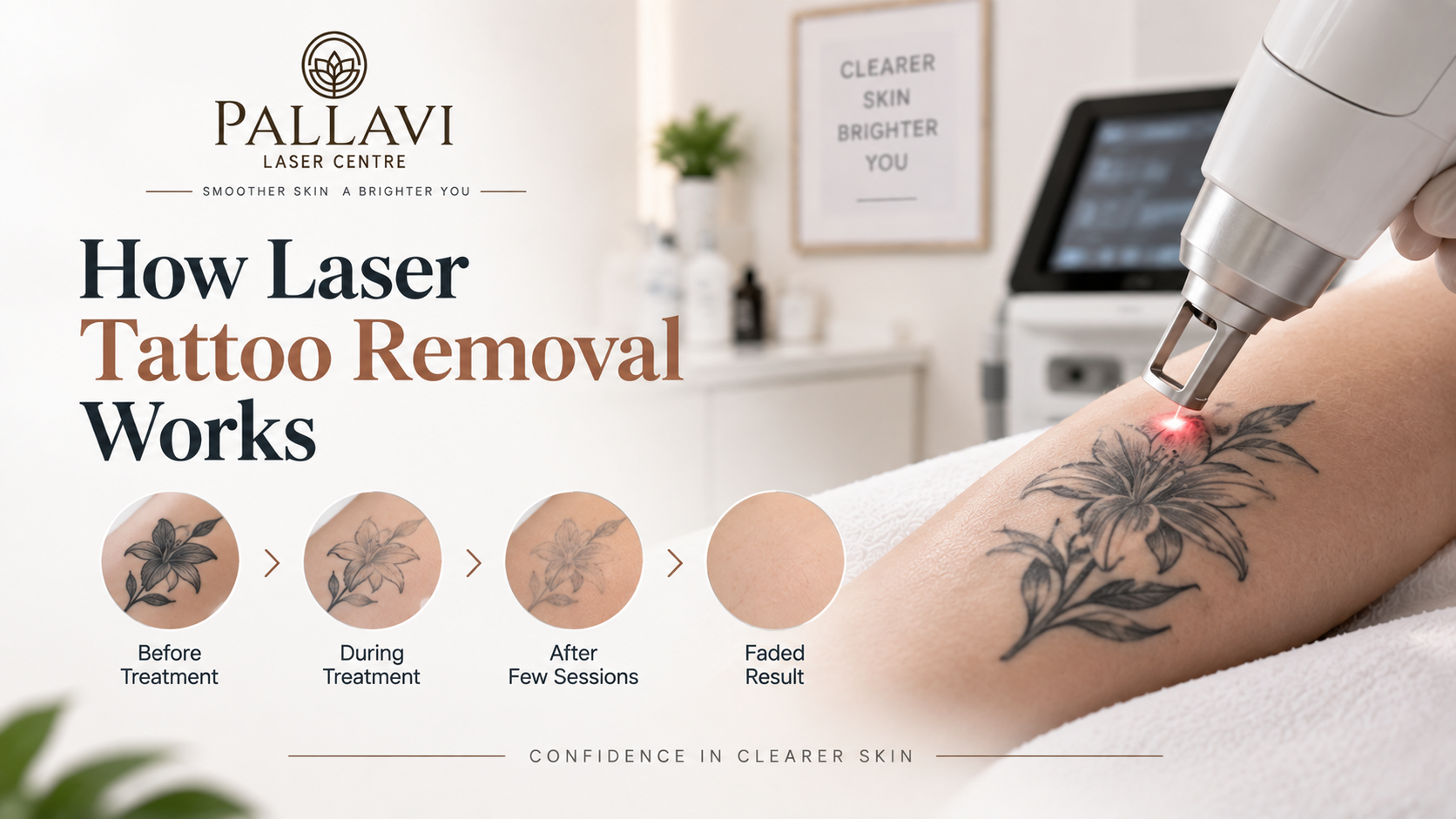
Tattoos are designed to remain in the skin for years, but personal preferences and circumstances can change. Some people may want a tattoo removed completely, while others may simply want it faded before getting a new design. Laser tattoo removal is one of the methods used to reduce unwanted tattoo pigment.
So, how does laser tattoo removal work?
Laser tattoo removal uses controlled pulses of light energy that target tattoo pigment in the skin. The energy breaks the pigment into smaller particles, which the body gradually clears over time. Because tattoo ink can sit at different depths and contain different colors, removal usually requires multiple treatment sessions rather than a single appointment.
The final result depends on several factors, including tattoo color, ink density, tattoo age, location, skin type, and individual response.
Why Are Tattoos Difficult to Remove?
When a tattoo is created, ink is deposited into the dermis, a deeper layer of the skin. Unlike temporary markings on the skin's surface, these pigment particles remain within the tissue.
The body's immune system may remove some smaller pigment particles naturally, but many tattoo particles are too large to be cleared effectively. This is one reason tattoos can remain visible for many years.
Laser treatment aims to break these larger pigment particles into smaller fragments.
The body can then gradually process and clear some of these fragments, causing the tattoo to fade over time.
How Does the Laser Target Tattoo Ink?
Laser tattoo removal uses specific wavelengths of light that can be absorbed by tattoo pigment.
When the laser pulse reaches the targeted ink, energy is delivered very quickly. This causes the pigment particles to fragment while treatment is planned to limit unnecessary injury to surrounding skin.
Different tattoo colors absorb different wavelengths of light. This means one laser setting may not be equally effective for every color in a multicolored tattoo.
Black and darker inks often respond differently from colors such as green, blue, yellow, red, or other shades. The type of laser and wavelength therefore need to be selected according to the tattoo being treated.
Does the Tattoo Disappear Immediately After Laser Treatment?
No. Laser tattoo removal is a gradual process.
The laser does not simply erase the tattoo during the appointment. Instead, it breaks down targeted pigment so that the body can gradually clear smaller particles following treatment.
As the area heals between sessions, the tattoo may progressively appear lighter.
The amount of fading after each session varies. Some areas of a tattoo may respond more quickly than others, particularly when several ink colors or different ink depths are involved.
Patients should therefore expect gradual changes rather than complete removal immediately after treatment.
How Many Laser Tattoo Removal Sessions Are Needed?
There is no fixed number of sessions that will remove every tattoo.
Professional tattoos with dense or multiple layers of ink may require a different treatment course from smaller or less densely pigmented tattoos. Tattoos containing several colors may also respond differently because individual pigments absorb laser wavelengths differently.
Other factors that may influence the treatment course include:
- Tattoo size and location
- Ink colors and density
- Depth of the tattoo pigment
- Professional versus amateur tattooing
- Age of the tattoo
- Skin characteristics
- Previous tattoo treatments
- Individual healing and response
Your provider should assess the tattoo before giving you a realistic treatment plan.
Why Is There a Gap Between Tattoo Removal Sessions?
Tattoo removal sessions need to be appropriately spaced.
After laser energy fragments the pigment, the skin needs time to recover, and the body needs time to process some of the disrupted pigment particles.
Performing treatments too close together does not necessarily mean the tattoo will disappear faster. It may instead increase unnecessary stress on the skin.
The recommended interval can vary depending on the tattoo, laser technology, treatment response, and healing process.
Your treatment provider should examine the area before deciding when another session is appropriate.
What Does Laser Tattoo Removal Feel Like?
Laser tattoo removal can cause discomfort.
People may describe the sensation as brief snapping, stinging, or heat as the laser pulses are delivered. The level of discomfort varies depending on tattoo location, size, individual sensitivity, and treatment settings.
Cooling methods may sometimes be used to improve comfort and protect the skin.
The length of the appointment also varies. A small tattoo may require less treatment time than a large or detailed tattoo.
If you experience unusual or severe discomfort during the procedure, tell the professional performing the treatment.
Explore Professional Laser Tattoo Removal Options
If you are thinking about removing or fading an unwanted tattoo, having the tattoo and your skin assessed first can help you understand what may realistically be achieved.
Explore laser and dermatology services at Pallavi Laser Centre to learn about available laser treatments and discuss an appropriate approach based on your tattoo, skin type, and treatment goals.
A professional consultation can also help you understand the likely treatment course, possible side effects, expected fading, preparation, and aftercare before you decide to proceed.
Can Every Tattoo Be Completely Removed?
Complete removal cannot be guaranteed for every tattoo.
Some tattoos may fade substantially, while others can leave residual pigment or a visible outline. Different sections of the same tattoo may also respond differently.
Ink color is one factor. Tattoo depth, density, layering, location, and previous treatments can also affect the response.
If a tattoo has been covered with another tattoo, multiple layers of pigment may be present, which can make the treatment process more complex.
For this reason, realistic expectations are important before beginning laser tattoo removal.
Is Laser Tattoo Removal Safe for Indian Skin?
Laser tattoo removal may be performed on different skin tones, including Indian skin, but treatment needs to be carefully planned.
Melanin in the skin can also interact with laser energy. More deeply pigmented skin may therefore require particular attention to laser selection, wavelength, energy settings, and treatment technique.
Pigmentation changes can occur after treatment. These may include temporary darkening or lightening of the treated skin.
A professional assessment of both the tattoo and natural skin tone is important before treatment begins.
What Happens After a Laser Tattoo Removal Session?
The treated area may temporarily become red, swollen, tender, or irritated. Some people can also experience blistering or crusting as the area heals.
Your provider should explain how to care for the skin after treatment.
Keeping the area clean, avoiding unnecessary irritation, and following instructions about sun exposure can be important during recovery. Do not pick at crusts or blisters, as this may interfere with normal healing.
Contact your treatment provider if you develop severe pain, worsening redness, signs of infection, or another unexpected reaction.
Can Laser Tattoo Removal Leave a Scar?
Scarring is a possible risk, although it does not occur in every person.
Risk can be influenced by treatment settings, individual healing, skin type, previous scarring, infection, and how the treated area is cared for afterwards.
Changes in skin pigmentation can also occur and should not be confused with scarring.
Discuss any history of raised or unusual scars with your provider before treatment. This information may influence whether treatment is suitable and how it is approached.
What Should You Ask Before Starting Treatment?
Before proceeding, make sure you understand what is realistic for your particular tattoo.
Ask which laser technology will be used, why it is appropriate for your tattoo colours and skin type, what reactions may occur, and what kind of fading may reasonably be expected.
You should also disclose medications, skin conditions, previous laser procedures, tendency to scar, and relevant medical history.
The goal should be a personalized treatment plan rather than a promise that every tattoo can be completely removed within a particular number of sessions.
Frequently Asked Questions
How does laser tattoo removal remove ink?
Laser energy targets tattoo pigment and breaks larger ink particles into smaller fragments. The body gradually clears some of these particles, causing the tattoo to fade.
Can a tattoo be removed in one laser session?
Usually not. Multiple sessions are commonly required because tattoo pigment needs to be treated gradually and the skin needs time to recover between treatments.
Which tattoo colors are easiest to remove?
Tattoo colors respond differently to particular laser wavelengths. Darker pigments such as black may respond differently from colored inks, while some colors can be more challenging to treat.
Does laser tattoo removal hurt?
Some discomfort is possible. People may experience brief heat, stinging, or snapping sensations during laser pulses.
Will laser tattoo removal leave completely clear skin?
Not always. Some tattoos may fade significantly, while others can leave residual pigment or skin changes. Complete removal cannot be guaranteed.
Can old tattoos be removed with laser treatment?
Older tattoos may be considered for laser treatment, but tattoo age is only one factor. Ink color, depth, density, location, skin type, and individual response also matter.
What Should You Expect From Laser Tattoo Removal?
Laser tattoo removal works by breaking tattoo pigment into smaller particles that the body can gradually process and clear. It is not an instant tattoo eraser, and results develop progressively across treatment sessions.
The number of sessions and amount of fading will vary from one tattoo to another. Tattoo color, ink depth, density, location, skin tone, and individual response all influence the process.
Starting with a professional assessment can help you understand whether your tattoo is suitable for laser treatment, what results may be realistic, and how your skin should be cared for throughout the removal process.

 English
