
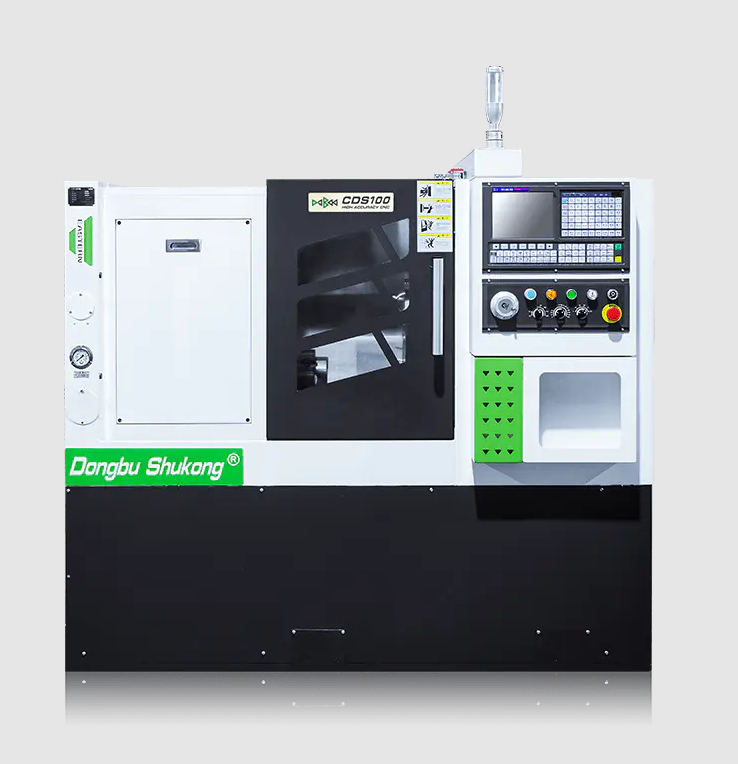
Metal turning can look simple from a distance: a round workpiece spins while a tool cuts away material. In practice, however, each movement needs to be coordinated carefully. A CNC Flat Bed Lathe brings these movements together through a programmable control system, creating a structured approach to turning different types of components.
The machine normally includes a bed, headstock, spindle, carriage, cross slide, tailstock, and CNC control system. Each section has a specific role. The spindle rotates the workpiece, the carriage guides longitudinal movement, and the cross slide controls radial movement. The tailstock can support longer workpieces or hold suitable tools for certain machining operations.
One reason a CNC Flat Bed Lathe is widely associated with general turning work is its flexible machine arrangement. It can process components with different diameters and lengths, depending on the machine specifications. Common applications include shafts, bushings, rollers, pins, flanges, threaded parts, and cylindrical housings.
Programming gives the operator another level of control. A machining program can define spindle speed, feed movement, cutting position, tool changes, and machining sequences. Once the program is prepared correctly, the machine can execute the defined movements in a consistent order.
Consider a simple stepped shaft. The first section may require rough turning, followed by a smaller diameter on another section. A groove could then be added near the shoulder, while a thread might be machined at the end. With a CNC Flat Bed Lathe, these operations can be arranged into one coordinated machining process when the machine configuration and tooling are suitable.
The machine can also support different production patterns. A workshop producing repeated components can use stored programs for recurring jobs, while a custom machining environment can adjust programs for individual parts. This makes the equipment relevant to both batch production and varied orders.
When evaluating a CNC Flat Bed Lathe, users should look beyond spindle speed alone. Important specifications include maximum swing, turning diameter, center distance, spindle bore, chuck dimensions, tool post configuration, axis travel, and available CNC functions. The actual workpiece requirements should determine which specifications matter most.
In everyday machining, the value of a CNC Flat Bed Lathe comes from the relationship between machine structure, cutting tools, spindle movement, and numerical control. Rather than relying on a single feature, the machine combines these elements into a coordinated turning process.

 English
